
Chapter 1
Structural Laws
Important repetitions in this segment:
- God, Father
- Son (of God), Firstborn
- Angels
Structure: This segment has a lot of contrasts, but not very much substantiation (the next segment is heavy on substantiation). In particular, most of the contrasts are between Jesus and the Angels.
Making a case for Jesus
The big picture in this segment is making a case for the authority of Jesus in areas that were previously assigned to prophets, kings and priests. Jesus is the son of God, and that he is greater than the angels (who, mind you, were highly revered in Jewish culture).
| Jesus is a… | Support: | |
| Prophet | Heb. 1:1-2 | in the past God spoke through the prophets, now spoken through Jesus |
| King | Heb. 1:3 | Upholding all things by the word of His power… Sat down at the right hand of the Majesty on High |
| Priest | Heb. 1:3 | purged our sins |
“A prophet is God’s representative to the people. He proclaims, he foretells, he exhorts, he presents God to the people.”
“A priest presents the people to God. He is a people’s representative before the Father. Today our priest is Jesus Christ.”
Greater than the Prophets
(NASB) Heb 1:1 God, after He spoke long ago to the fathers in the prophets in many portions and in many ways, 2 in these last days has spoken to us in His Son, whom He appointed heir of all things, through whom also He made the world.
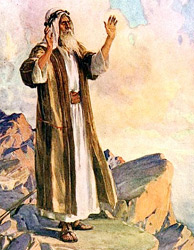 The fathers (aka patriarchs) included Abraham, Isaac, Jacob, David, etc. The prophets included Isaiah, Jeremiah, John the Baptist, etc. Some of the many ways God spoke to them were: visions, dreams, the burning bush, speaking, etc. Now God speaks to us through his Son; he is stepping in the place of these people who are highly revered by Jews, like Moses and Elijah.
Who decides how God speaks to us?
God is the one who decides how he speaks to us.
| Prophets | The Son |
| Spoken to in diverse manner | Not only spoken to, but WAS the message |
| Sinful men | Free of Sin |
| Did not possess the Spirit continually (Spirit came and went, eg. in Psalms “don’t leave me”) |
Given the Spirit permanently (was a mind-blowing concept to Jews) |
“All the prophets, and all the writings and all the revelations up til now, have all been but shadows and hints at the aspects of Jesus Christ. (Contrast 1 Tim 6:16 with Col 1:15.)” -Chuck Missler
Heir of All Things
Jesus is the “heir of all things” (1:2). When we think of inheritance we tend to think about material possessions, but, in addition, inheritance can also include position, like the authority of a King is traditionally inherited.
Jesus is inheriting God’s power and authority.
Consider John 1:12, “But to all who did receive him, who believed in his name, he gave the right to become children of God…” As believers we are children of God. How does Jesus being the “heir of all things” affect us as children of God? Being a child of God means we have an inheritance of Jesus Christ, we are joint heirs, not some sort of lesser heirs. If we suffer with him, we will inherit with him.
Maker of the Worlds
God “made the world(s)” through his son (1:2). The greek word translated world(s) is indicative of spanning time and space. Christ was there before time began. This verse is telling us Jesus = the creator.
A King and Priest in the Image of God
3 And He is the radiance of His glory and the exact representation of His nature, and upholds all things by the word of His power. When He had made purification of sins, He sat down at the right hand of the Majesty on high, 4 having become as much better than the angels, as He has inherited a more excellent name than they.
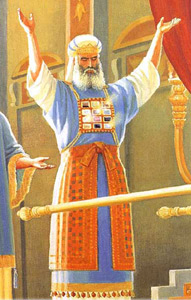 “He is the radiance of His glory and the exact representation of His nature” (1:3) Jesus is the radiance of God’s glory. Jesus is a representation of the nature of God, the essence of God.
“Upholds all things by the word of His power” (1:3) Jesus’ word has power. Even going back to John 1:1, God has so much power that the mere act of speaking creates, this is the kind of power Jesus has also.
“He had by Himself purged our sins” (1:3) Purification of Sins was something that was done by priests. Implication: Jesus is a priest.
Jesus is a Priest and a King.
“Majesty on high” (1:3) implicates a high king. Not just any king, but a high one, one of authority who “upholds all things by the word of His power” (1:3). Notice also that he sat down (1:3). When do you sit down? When you’re done working. “It is finished.” (Jn. 19:30)“Sat down at the right hand of the Majesty on high” (1:3)
- A position of honor
- Something seniors do in front of juniors
- Implies continuance, abiding
- A contrast to the tabernacle.
“There is no chair in the Tabernacle, because the priest’s work was never done (10:1, 3) versus John 19:30. But today, Jesus Christ is sitting.” -Chuck Missler
“Right hand” – This is a position of power according to Exodus 15:6, and a position of honor according to 1 Kings 2. (Missler)
Greater than the Angels
5 For to which of the angels did He ever say, “You are My Son, Today I have begotten You” And again, “I will be a Father to Him, And He shall be a Son to Me”? 6 And when He again brings the firstborn into the world, He says, “And let all the angels of God worship Him.” 7 And of the angels He says, “Who makes His angels winds, And His ministers a flame of fire.”
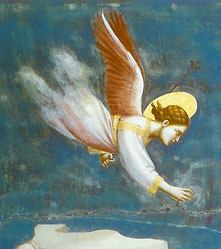
Angels were important beings from a Jewish perspective, because among other things angels were intimately involved in the giving of the law to Moses. Angels can have an inconspicuous appearance like that of a man (such as the angels Lot entertained in Genesis 19), but are also capable of some pretty unusual form and appearance (eg. in Mt. 28:3 an angel is described as having an “appearance like lightning” and “clothing as white as snow”) and sometimes are not visible to us unless God opens our eyes to their presence (2 Kings 6:17).
Jesus is greater than the angels.
The home of Angels is Heaven. They are strong, God’s ministers, holy, and surround God’s throne. They do battle on our behalf. They have a lot of power—look throughout the bible at what just one or two angels can do.
| Angels | Jesus | ||
| Even the angels worship Jesus | Heb 1:6 | Better than the angels, having a more excellent name | Heb 1:4 |
| Never called a son of God | Heb 1:5 | A son of God | Heb 1:5 |
| The angels were created | Heb 1:7 | Laid the foundation of the earth (Creator) | Heb 1:10 |
| Do not sit at the right hand of God | Heb 1:13 | Sits at the right hand of God | Heb 1:3 |
| Heb | Verse as Quoted in Hebrews | From | |
|
1
|
1:5 | You are My Son, Today I have begotten You | Ps 2:7 |
|
2
|
1:5 | I will be to Him a Father, And He shall be to Me a Son | 2 Sam 7:14 |
|
3
|
1:6 | Let all the angels of God worship Him | Ps 97:7 |
|
4
|
1:7 | Who makes His angels spirits And His ministers a flame of fire | Ps 104:4 |
|
5
|
1:8-9 | Your throne, O God, is forever and ever; A scepter of righteousness is the scepter of Your kingdom. You have loved righteousness and hated lawlessness; Therefore God, Your God, has anointed You With the oil of gladness more than Your companions. | Ps 45:6-7 |
|
6
|
1:10-12 | You, LORD, in the beginning laid the foundation of the earth, And the heavens are the work of Your hands. They will perish, but You remain; And they will all grow old like a garment; Like a cloak You will fold them up, And they will be changed. But You are the same, And Your years will not fail. | Ps 102:25-27 |
|
7
|
1:13 | Sit at My right hand, Till I make Your enemies Your footstool. | Ps 110:1 |
If you look up those verses, you will find the context of these verses provides even more support, they are not “quoted out of context”.
Bonus: The number of verses quoted may have significance. When we see 7s in the bible, or 7 of something, it is usually associated with God and not man, as well as completion, or a divine mandate has been fulfilled.
“Let all the angels of God worship Him” (1:6) If even the angels worship Jesus, why would you worship an angel?
What God Says of the Son
8 But of the Son He says, “Your throne, O God, is forever and ever, And the righteous scepter is the scepter of His kingdom. 9 “You have loved righteousness and hated lawlessness; Therefore God, Your God, has anointed You With the oil of gladness above Your companions.” 10 And, You, Lord, in the beginning laid the foundation of the earth, And the heavens are the works of Your hands; 11 They will perish, but You remain; And they all will become old like a garment, 12 And like a mantle You will roll them up; Like a garment they will also be changed. But You are the same, And Your years will not come to an end.”
“Your throne, oh God, …” (1:8) Notice that God, the father, is speaking to the Son, and addressing him as “oh God”.
“A scepter of righteousness” (1:8) Scepter = a staff a king holds, a symbol of authority, but is also a weapon of war. Consider how righteousness can be both a symbol of authority and a weapon of war.
Living a righteous life has the potential
to bring your foes to their knees.
“Your God has anointed you with the oil of Gladness” (1:9) The word anointing used here has the connotation of smearing, not dotting lightly. Be drenched, not dotted, with this anointing.
“You have loved righteousness and hated lawlessness” (1:9) Jesus loves righteousness. Jesus hates lawlessness. Mind you its breaking the law he hates, not you.
“You, Lord, in the beginning” (1:10) Again this is the Father speaking to the Son.
 “the heavens are the works of your hands” (1:10) Note the different “levels” of heavens—the atmosphere/sky, the place where the starts hang, and the Heaven where God resides…They all use the same Greek word, but the meaning may be different in different cases.
“they all will become old like a garment” (1:11-12) Imagine a tattered childhood blanket. Even the heavens become old and worn out and torn up (eg. ozone depletion?) and in need of making new. But God will “roll them up” like a cloak or outer garment.
What is a mantle (1:12)? See Strongs 4018 (peribolaion). It means something thrown or wrapped around, like a veil or covering. It is the same term used in 1 Corinthians 11:15 to describe how a woman’s hair isgiven to her as a covering.
How is God described in this verse (1:12)? Unchanging, without end.
The Role of Angels
13 But to which of the angels has He ever said, “Sit at My right hand, Until I make Your enemies A footstool for Your feet”? 14 Are they not all ministering spirits, sent out to render service for the sake of those who will inherit salvation?
“Sit at My right hand, until I make Your enemies a footstool for Your feet” (1:13). This verse is quoted from Psalm 110:1, a psalm of David. The implication here is that God did say this to Jesus, unlike the angels. For further study, read Matthew 22:41-46 where this same verse is quoted by Jesus and the pharisees were shocked into silence.
 Two teenage girls, Tara & Melissa reenact what
an enemy becoming your footstool might look like
What are ministering spirits (1:14)? Angels. Spirits that “render service” for those inheriting salvation. “Ministering spirits” also translated as “the angels of Ministry” or “the ministering angels” was a common rabbinical phrase that would have been familiar to the audience receiving this letter (Gill). Who is it that will inherit salvation? Us, the children of God, who are being made joint heirs. What is the significance of this? The angels purpose to serve God by ministering to “his children” is another sign of God’s superiority over the angels.
 |
Chapter Navigation
 |
 |